Key Takeaways
- Familiar activities can create opportunities for engagement, comfort, and meaningful connection.
- Outdoor time, music, arts and crafts, photographs, games, and familiar tasks can be adapted to different abilities.
- Simple recipes, sensory activities, reading, and gentle movement offer different ways to participate.
- Choose activities around the person’s current interests, abilities, energy, and comfort.
- Use simple directions, allow extra time, supervise as appropriate, and stop if the activity causes distress.
Meaningful Activities for People Living with Dementia
Dementia can change how a person communicates, moves, processes information, and participates in familiar routines. That may mean adjusting how you spend time together, but it doesn’t remove the possibility of connection. Simple experiences built around long-standing interests can make participation feel more familiar and manageable.
Ten activities to try with a person living with dementia include:
- Spending time outdoors together
- Listening to familiar music
- Creating simple arts and crafts
- Looking through family photo albums
- Playing games and doing puzzles
- Cooking or baking simple recipes together
- Encouraging gentle physical movement
- Exploring sensory activities
- Reading stories or poetry together
- Helping with familiar household tasks
10 Activities to Try with Someone Living with Dementia
No single activity will work for every person or every day. Begin with what your loved one has enjoyed in the past, simplify the activity as needed, and treat their response as your guide. The goal is shared experience—not testing memory, correcting mistakes, or finishing a task.
1. Spend Time Outdoors Together
A short walk, time in a garden, or bird-watching from a patio may offer a pleasant change of setting. Choose a familiar, accessible area, consider the weather and the person’s mobility, and provide supervision as needed. If going outside isn’t comfortable, sitting near a window can offer a quieter alternative.
2. Listen to Familiar Music
Play music the person has enjoyed across different parts of life, and notice how they respond. They may want to sing, tap to the rhythm, move gently, talk about the song, or simply listen. Keep the volume comfortable, and change or stop the music if it seems overstimulating.
3. Create Simple Arts and Crafts
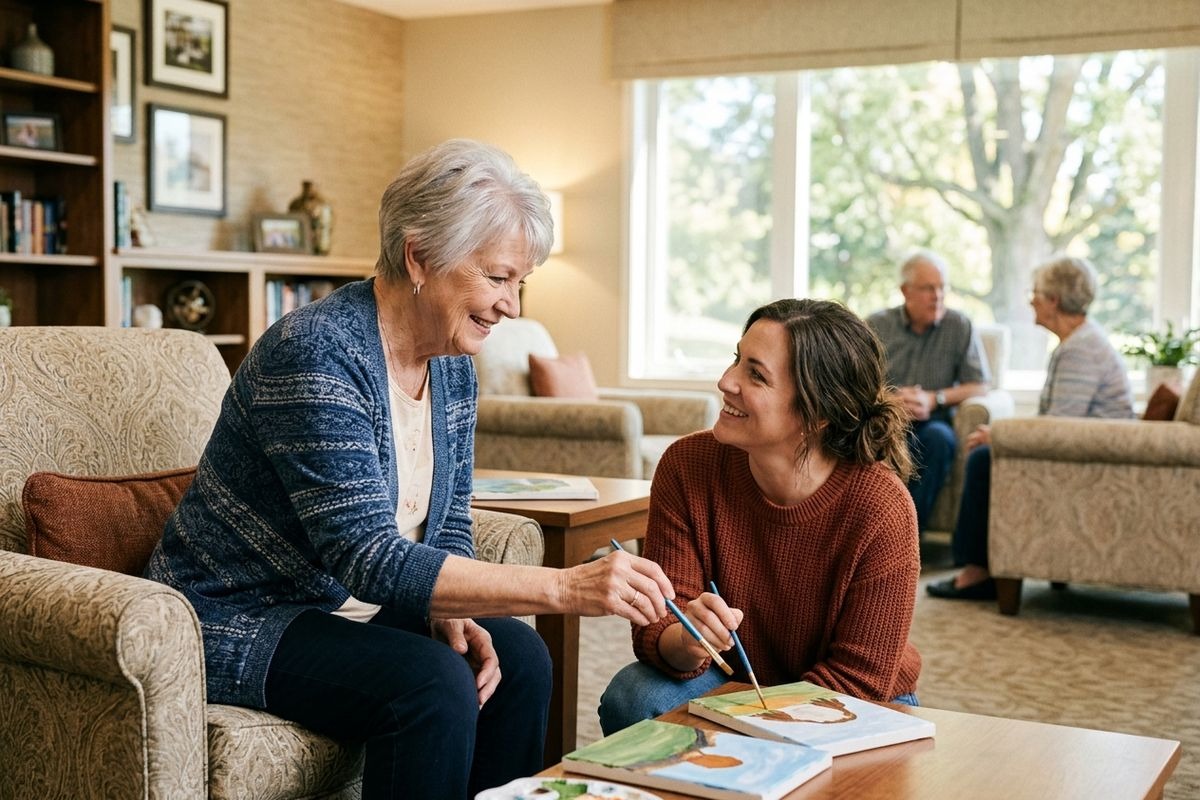
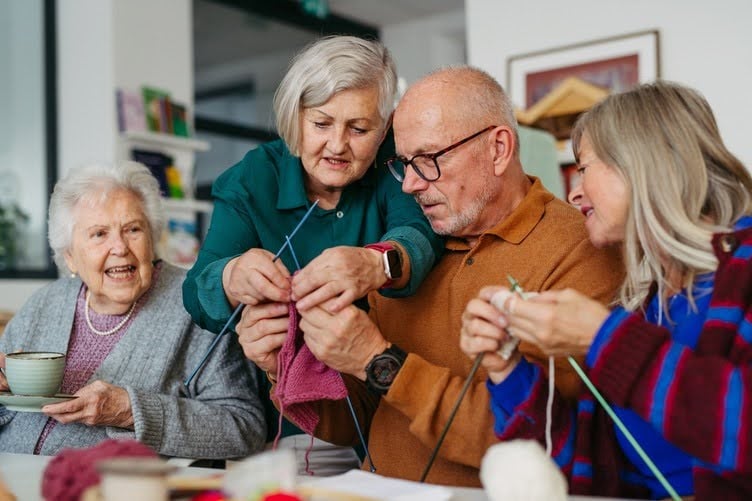
Painting, coloring, working with clay, or making a seasonal decoration can offer a way to participate without relying only on conversation. Use easy-to-handle, nontoxic materials, limit the number of choices, and focus on exploration rather than how the finished project looks.
4. Look Through Family Photo Albums
Look through familiar photographs without turning the activity into a memory test. You might describe what you notice, name people gently, or invite a story without pressing for an answer. Follow the person’s emotions and set aside any image that seems upsetting or confusing.
5. Playing Games and Doing Puzzles
Large-piece puzzles, matching activities, dominoes, or simplified card games may offer an enjoyable shared focus. Choose familiar rules, remove unnecessary pieces, and offer help without taking over. If the game becomes frustrating, switch to sorting pieces, talking about the images, or another activity.
6. Prepare a Simple Recipe Together
A familiar recipe can involve sight, smell, touch, and taste. Offer manageable steps such as stirring, washing produce, or decorating cookies. Handle knives, hot surfaces, and appliances yourself when appropriate, and consider dietary restrictions or swallowing concerns when choosing ingredients.
7. Encourage Gentle Movement
A short walk, seated stretches, or movement to music can add activity to the day. Match the movement to the person’s mobility and balance, keep the space clear, and stay nearby if support is needed. Ask a health-care professional for guidance when you’re unsure what movement is appropriate.
8. Explore Sensory Activities
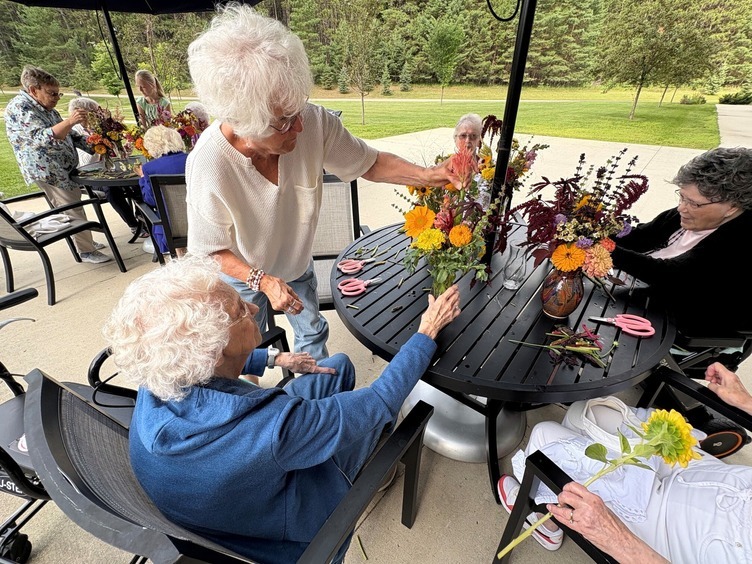
Soft fabrics, textured objects, flowers, or familiar household items can offer a quiet way to explore through touch, sight, or smell. Choose safe, recognizable objects; avoid anything sharp, breakable, or small enough to swallow; and be mindful that strong scents or textures may feel unpleasant.
9. Read Stories or Poetry Together
Read a short story, poem, spiritual passage, newspaper item, or familiar book at an unhurried pace. The person may want to discuss it, read a line aloud, or simply listen. Large print, short selections, and a quiet setting can make the activity easier to follow.
10. Invite Participation in Familiar Tasks
Folding towels, sorting socks, watering plants, or setting out napkins can offer a familiar role in everyday life. Present the activity as an invitation rather than an obligation, provide only the materials needed, and thank the person for participating without correcting the result.
How to Adapt Dementia Activities with Care
How you introduce an activity can matter as much as the activity itself. A calm setting, familiar materials, and a flexible approach can make participation easier and more respectful.
Follow the Person’s Pace
Allow extra time, and don’t rush to finish. Interest and energy can vary from day to day, so follow verbal and nonverbal cues. A smile, relaxed posture, turning away, or growing restlessness can help you decide whether to continue, simplify, or stop.
Offer One Simple Step at a Time
Use short directions, demonstrate the next step, and allow time for a response. Offer limited choices instead of several options at once. Encouragement is usually more supportive than pointing out mistakes or repeatedly explaining what to do.
Focus on Connection, Not Completion
A puzzle doesn’t need to be completed, and a painting doesn’t need to look a certain way. Let the activity change naturally. The time together can still be meaningful even if participation lasts only a few minutes.
Adapt Activities as Needs and Interests Change
Dementia affects each person differently, and abilities, interests, or comfort may change. Simplify steps, shorten the activity, change the setting, or try another day again. If an activity repeatedly causes distress, choose something else rather than pushing through it.
Memory Care at Crystal Brook by Vivie
Meaningful activities can support connection, comfort, and familiarity throughout the dementia journey. The most helpful approach is personal and flexible: begin with the person’s interests, notice their response, and adapt without pressure.
At Crystal Brook by Vivie in Park Rapids, Minnesota, the Gems Memory Care offers a safe, nurturing environment with physical, emotional, and spiritual support from a team on-site 24/7. Residents can take part in crafts, music, sing-alongs, Bible study, exercise, and experiences tailored to individual backgrounds.
Contact us to learn more or schedule a tour of Crystal Brook.


Vivie
Vivie offers an integrated set of services, including senior living, home health, care management, rehabilitation, hospice, and more. With nearly 2,500 team members serving people across Minnesota, North Dakota, and Wisconsin, Vivie is committed to enriching, empowering, and elevating people throughout life’s journey. Rooted in a foundation of faith and focused on transforming the way people live, age, and thrive, Vivie tailors its support to meet the unique needs of every person.