
When a loved one is living with a chronic health condition, much of their care happens at home. For family members, that can mean helping keep track of symptoms, medications, appointments, and changes that may signal a need for additional support.
That can become even more complicated when someone is managing more than one condition.
“It’s not unusual for someone to be managing two or even all three of these conditions at the same time,” says Christina Mountjoy, regional clinical operations manager with Vivie’s home health care team. Chronic obstructive pulmonary disease (COPD), congestive heart failure (CHF), and diabetes can affect one another, and medications, diet, activity, and symptoms may overlap.
Understanding what to watch for and when to reach out for help can make caring for a loved one feel less overwhelming. While every condition comes with different needs, there are some basic approaches that can help families support a loved one’s health at home.
.jpeg?width=569&height=380&name=AdobeStock_178514370%20(1).jpeg) What helps with managing chronic conditions at home?
What helps with managing chronic conditions at home?
Knowledge and consistency can make a big difference when supporting a loved one with a chronic health condition. Learn what you can about their condition, ask questions when something isn’t clear, and help them stay consistent with medications, monitoring, nutrition, and activity based on guidance from their care team.
It’s also important to know what’s normal for your loved one. Their usual weight, blood sugar levels, breathing, and other symptoms can provide a baseline that makes changes easier to recognize.
“Teaching people what to watch for and what to do when something starts to change can make a huge difference in preventing a small problem from becoming a hospital stay,” Christina says.
Recognizing those changes early gives you an opportunity to reach out to the care team for guidance before symptoms become more serious.
Supporting a loved one with COPD at home
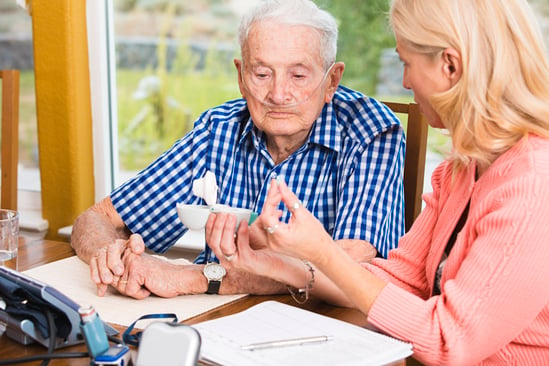 Daily COPD care may include medications, inhalers, or nebulizers; oxygen as prescribed; and regular monitoring of breathing and symptoms. Helping your loved one build these steps into a familiar routine can make them easier to maintain. It can also help when they understand why each part of their care is important.
Knowing your loved one’s usual breathing and activity level can help you spot changes. Watch for signs such as needing more frequent breaks during a short walk, increased coughing, changes in mucus, or simply noticing that they don’t seem like themselves. These changes are a reason to check in with their care team.
Activity can also be an important part of living with COPD. Encourage your loved one to follow their care team’s recommendations for appropriate activity and exercise, taking breaks and pacing themselves as needed.
Supporting a loved one with CHF at home
Daily weight checks can be an important part of caring for someone with congestive heart failure (CHF). Keeping the scale visible and weighing at the same time each day—such as first thing in the morning after using the bathroom—can make this easier to build into a routine.
Sodium is another consideration because it can contribute to fluid retention. It can also be found in foods that may not taste especially salty, including processed foods, frozen meals, restaurant meals, and packaged snacks. Reading food labels can help, along with following guidance from your loved one’s care team about how much sodium is right for them.
Knowing your loved one’s usual weight, breathing, and energy level can also help you recognize changes. Watch for increased shortness of breath, swelling in the legs or feet, rapid weight gain, increased fatigue, or needing to sleep upright because lying flat is uncomfortable. If you notice changes from what’s normal for your loved one, reach out to their care team for guidance.
Supporting a loved one with diabetes at home
Consistency is an important part of managing diabetes at home. Family caregivers can support a loved one by helping them follow their care plan, including taking medications as prescribed, monitoring blood sugar as recommended, eating consistently, and staying active within their ability.
When your loved one is managing diabetes along with other chronic conditions, keep the whole picture in mind rather than focusing on a single blood sugar reading. Their care team can help you understand what to monitor and when a change may need additional attention.
Helping your loved one stay involved in their care
 Supporting a loved one doesn’t have to mean doing everything for them. Ask what they would like help with and look for ways to support them while keeping them involved in decisions and daily care as much as possible. This can help them maintain a sense of choice and independence as their needs change.
Caregivers need support, too, and you don’t have to handle every part of your loved one’s care on your own.
“Accept help, take breaks, share responsibilities when possible, and ask for help when the situation isn’t sustainable,” Christina says.
Reaching out early to family members, friends, or your loved one’s care team can help you find the support you both need at home.
Knowing when to reach out for help
When you’re caring for a loved one with a chronic health condition, it can be difficult to know when a change needs attention. Mild symptoms that are consistent with your loved one’s usual condition may simply need to be monitored. Knowing what’s normal for them can help you recognize when something has changed.
New or worsening symptoms are a reason to contact your loved one’s doctor or care team for guidance. If you’re unsure about a change, reach out rather than waiting to see if it improves.
Call 911 for severe difficulty breathing, significant chest pain, unresponsiveness, a sudden severe change in mental status, or another potentially life-threatening emergency.
Recognizing changes early is important with other health concerns, too. Learn more about how to recognize the early signs of sepsis at home.
How home health care by Vivie can help with chronic conditions
Home health care provided by Vivie brings skilled care into your loved one’s home, where our experienced team can see how they’re doing in their everyday environment. Regular visits can help identify changes in breathing, weight, mobility, or other symptoms and address practical challenges, such as difficulty opening a medication bottle or understanding care instructions.
For family caregivers, our home health care team also provides another source of guidance and support. A nurse can help you and your loved one understand what to watch for, answer questions about their care, and recognize when a change may need additional attention.
Our team coordinates with physicians and other providers so changes can be communicated and addressed. Tools such as personal emergency response systems (PERS) and medication reminder systems can provide additional support between visits, helping your loved one stay safe and follow their care plan at home.
Ready for more support at home?
If your loved one is living with COPD, CHF, diabetes, or another chronic health condition, Vivie’s home health care team can help you understand what support may be available at home. Our team can answer your questions, learn more about your loved one’s needs, and help you determine the next step.

Christina Mountjoy
Christina Mountjoy brings 10 years of home health-care experience to her role as regional manager of home health clinical operations at Vivie. She oversees daily operations for her branch and works closely with clinical teams to support patient care, workflow, and other needs.
Christina began her home health-care career as an RN case manager, a role that sparked her passion for working with older adults in their homes and helping them achieve their health goals. She later served as a quality and education manager before moving into her current leadership role. Christina holds an associate’s degree in applied science and a degree in nursing. She also served for six years with the Minnesota Army National Guard and for three years as a volunteer firefighter.

Vivie
Vivie offers an integrated set of services, including senior living, home health, care management, rehabilitation, hospice, and more. With nearly 2,500 team members serving people across Minnesota, North Dakota, and Wisconsin, Vivie is committed to enriching, empowering, and elevating people throughout life’s journey. Rooted in a foundation of faith and focused on transforming the way people live, age, and thrive, Vivie tailors its support to meet the unique needs of every person.
.jpg)